How to Recover Stolen Cryptocurrency: A Step-by-Step Guide
Last reviewed Sep 11, 2026 · Reviewed by our CEH-certified investigation team
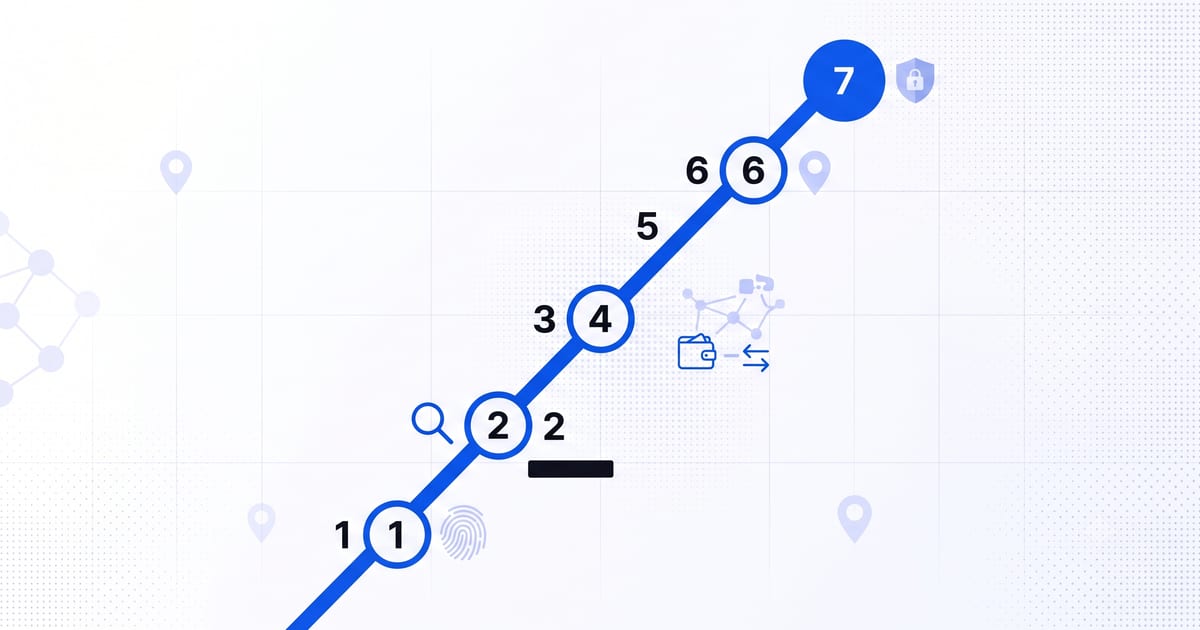
Every blockchain transaction is permanent the moment it confirms. No wallet provider, no exchange, and no investigator can reverse it — that's not a limitation of the tools available, it's the entire design point of a blockchain. So when people ask how to recover stolen cryptocurrency, the honest answer isn't a single action. It's an investigative and legal process: trace where the funds went, work out who's on the other end and where they're legally reachable, and turn that into a complaint an exchange, regulator, or court has a real reason to act on.
This guide walks through that process end to end — what to do in the first hour, what actually happens during a blockchain trace, which cases realistically go somewhere, and how long it takes. Nothing here promises a guaranteed outcome. Nobody can honestly make that promise, and you should be cautious of anyone who does. (If you're not actually sure a scam is what happened — an exchange collapse, a locked wallet, and a few other situations all get lumped in as "lost crypto" too — our guide to all five recovery scenarios can help you confirm which one applies before you read further.)
Why "reversing" a transaction isn't possible
A blockchain is a public, distributed ledger maintained by thousands of independent computers, not a single company's database. Once a transaction has enough confirmations, changing it would mean rewriting history that every one of those computers has already agreed on — which is precisely what the technology is built to prevent. That's different from a bank or a centralized exchange, where a single operator controls the ledger and can, in some circumstances, freeze or reverse activity on its own platform.
That distinction is the whole reason recovery works the way it does: nothing can undo the original transaction, but the funds almost always have to land somewhere eventually — an exchange, a bridge, an over-the-counter desk — and that "somewhere" is usually a business with its own compliance obligations. Recovery means finding that point and getting the entity that controls it to act.
Step 1: Secure what's left, immediately
Before anything else, stop further loss. If the compromise happened through a phished seed phrase, a malicious wallet approval, or a fake app, assume the wallet itself is no longer safe:
- Move any remaining funds to a brand-new wallet with a freshly generated seed phrase — not a "recovered" version of the compromised one.
- Revoke open token approvals using a reputable approval-checking tool, on every chain the compromised wallet touched.
- Change passwords and enable 2FA on any exchange account, email, or password manager that could be linked to the incident.
Step 2: Preserve the evidence a trace actually needs
Even minimal information helps, and it's far easier to gather now than later. Useful details include:
- Transaction IDs (TXIDs) for every transfer involved
- Your own wallet address and, if known, the receiving address
- The platform or exchange used, if any
- Screenshots of the platform, chat logs, or communications with the scammer
- Approximate dates, amounts, and how the funds were sent
Step 3: Report it — regardless of anything else
File with IC3.gov (the FBI's Internet Crime Complaint Center) and the FTC within 24 hours of discovery, and notify any exchange whose wallet addresses are involved so they can flag the destination account. Do this yourself immediately, whether or not you also pursue a separate investigation — it costs nothing, takes minutes, and creates an official record.
Step 4: Blockchain transaction tracing
This is the technical core of recovery. A transaction hash is enough for a certified investigator to follow the money trail — hop by hop — across wallets, exchanges, and bridges, including through mixers and cross-chain "chain-hopping" designed to obscure the trail. Multi-hop tracing gets harder with each additional hop, but it's often still possible to identify where funds ultimately landed, even when the path isn't straightforward. (Curious what this actually looks like from the other side? Here's CoinTrace Pro's own process, case submission through settlement, step by step.)
Step 5: Identifying the merchant and jurisdiction
Tracing tells you where the funds went; this step tells you who's actually there. That means identifying the platform behind the receiving wallet, the jurisdiction it operates in, and its history of fraud reports — turning an anonymous-looking address into an actionable target with a real-world legal location.
Step 6: Building evidence exchanges and regulators take seriously
A trace by itself doesn't move an exchange to act — a clear, organized report does. That typically means a structured case file, a transaction and communication log, and documentation written so it can be shared with your bank, an exchange's compliance team, a regulator, or your own attorney without needing to be re-explained from scratch.
Step 7: Filing the complaint and negotiating a settlement
With evidence in hand, the next step is filing in the merchant's jurisdiction — working with your own attorney if you have one, or being pointed toward firms experienced in that specific jurisdiction if you don't. Court orders and evidence can also be shared directly with the relevant exchange to request a freeze on the merchant's account and help identify who's actually behind it. Once a legal filing and solid on-chain evidence are both in place, direct negotiation with the merchant becomes possible — though, as with every step here, a settlement is something that can be pursued, never something that can be promised.
A realistic timeline
Based on how this process actually plays out, start to finish:
- Same day to next business day — initial contact and case intake
- Up to 72 hours — engagement terms and gathering your documentation
- 2 business days — case file preparation
- 1 day to 1 week — the dual-track investigation (identifying the merchant while tracing the funds)
- 2 days to 1 week — findings report and legal roadmap
- About 1 week — exchange coordination and freeze requests
- About 1 week — jurisdiction filing and direct merchant contact
Altogether, that's typically 3–5 weeks from first contact to filing — an investigation and legal-groundwork timeline, not a promise about if or when funds are actually recovered. What happens after filing depends on an exchange, a merchant, or a regulator acting on the case, which is outside any investigator's direct control.
What actually determines whether a case is traceable
Two factors matter more than any other: how fresh the case is, and whether the funds moved through a compliant exchange at any point. Cases reported soon after the loss trace far better than old ones — funds keep moving and trails go cold over time. That said, older cases aren't automatically hopeless, particularly where the loss is significant; they typically need a different investigative approach, and a legitimate process will say so honestly upfront rather than taking the case regardless.
Based on real case history, roughly 50–60% of cases taken on end in some level of recovery — highest for cases reported quickly. That figure is a rate, not a dollar amount, and it isn't a guarantee for any individual case.
Which blockchains can actually be traced
Public, high-liquidity chains are the most traceable, since every transaction is permanently recorded and most funds eventually pass through a centralized exchange that performs identity verification. That covers the chains most crypto scams actually move through: Bitcoin (BTC), Ethereum (ETH), Tether (USDT), Tron (TRX), BNB Smart Chain (BNB), Solana (SOL), Polygon (MATIC), Litecoin (LTC), Ripple (XRP), and Avalanche (AVAX).
If your case involves a self-custody wallet specifically — MetaMask, Trust Wallet, or similar — the mechanics of how funds actually leave those wallets and what to do in the first hour are covered in more detail in this dedicated guide. And for a sense of how tracing holds up even years after the fact, the Bitfinex hack — 119,754 BTC stolen in 2016, with a $3.6B seizure following in 2022 — remains one of the clearest public examples of long-horizon blockchain tracing working.
Does this process change based on how the funds were taken?
The investigative steps stay the same, but what you should expect — and how the money moved — varies by scam type. The patterns we see most often:
Romance and relationship scams
Funds sent to a partner met online who turned out to be operating a scam — often over weeks or months, in multiple transfers rather than one.
Pig-butchering schemes
A long-run relationship or friendship-building scheme, distinct from a simple romance scam, that ends in a fraudulent investment platform ask — usually with a fake dashboard showing invented "profits" to encourage larger deposits.
Forex and investment fraud
Deposits into a trading platform that initially allows small withdrawals to build trust, then stops honoring withdrawal requests entirely once the deposited amount grows.
Fake crypto platforms and exchanges
Wallets or exchanges built specifically to take deposits and disappear — sometimes running for months to build a credible-looking track record first.
Ponzi and pyramid schemes
Returns paid from new deposits rather than any real underlying trading or investment activity — traceable back to the point where the scheme's inflows stopped matching its payouts.
Crypto withdrawal scams
A platform that shows a balance but invents escalating fees, "taxes," or verification steps to block every withdrawal attempt — the balance itself was often never real.
In every one of these, the technical tracing step is identical: follow the transaction from your wallet to wherever it currently sits. What changes is the evidence that helps most — chat logs and platform screenshots for a pig-butchering or fake-platform case, deposit and "profit" statements for a Ponzi scheme, the fee or tax demand itself for a withdrawal scam.
Most "guaranteed recovery" offers are a second scam.
Fraud victims are routinely targeted a second time by services that guarantee results for an upfront fee and disappear. Be cautious of anyone who:
- Guarantees 100% (or any specific %) of your funds back
- Asks for your seed phrase or wallet private keys
- Demands a large upfront fee with no explanation of the work
- Has no named company, license, or verifiable address
- Pressures you to decide immediately
A legitimate process instead:
- Offers a free review before any commitment
- Never asks for your seed phrase or private keys
- Charges no fee for the investigation itself — you only ever cover your own direct costs, paid to third parties
- Tells you honestly when a case isn't traceable
- Gives you documentation you can independently verify
Frequently asked questions
Can stolen crypto actually be recovered?+
Sometimes — but nobody can honestly guarantee it, and you should be cautious of anyone who does. Recovery isn't something a recovery firm does unilaterally; it happens when an exchange freezes funds or a regulator or law enforcement agency acts, usually because a well-documented complaint gave them a reason to. The investigative work below is what builds that case.
How long do I have before it's too late to trace stolen crypto?+
There's no hard cutoff, but every hour matters. Funds that are still sitting in the first wallet they were sent to are far easier to act on than funds that have already moved through several hops. Cases reported within the first 48 hours trace meaningfully better than cases reported weeks or months later.
Does it matter which blockchain the funds were sent on?+
Yes. Public, high-liquidity chains — Bitcoin, Ethereum, USDT, TRON, BNB Smart Chain, Solana, Polygon, Litecoin, XRP, and Avalanche among them — are the most traceable, since transaction history is permanent and public, and most funds eventually pass through a centralized exchange that performs identity verification (KYC). Funds that stay entirely within self-custody wallets, or route through services with no compliance program, are considerably harder to act on.
What's the realistic timeline for a case, start to finish?+
Based on real case handling: contact and intake happen the same day or next business day, followed by roughly 72 hours to gather documentation, 2 business days to prepare the case file, 1 day to 1 week for the dual-track investigation, and about a week each for the findings report and exchange coordination. Typically 3–5 weeks from first contact to filing — not a promise about when or whether funds are actually recovered, since that depends on an exchange, regulator, or court acting on the case.
Do I need to pay anything upfront?+
No, for the investigation itself. A legitimate process charges nothing for tracing, case-building, or negotiation with the merchant. Any costs you do pay — your own legal counsel, an official filing fee, travel — go directly to that third party, never to the firm doing the tracing, and should be explained upfront before you commit to anything.
Start with a free, no-obligation case review
A specialist will tell you honestly whether your case looks traceable before you spend anything — no recovery, no fee for that work.
Get a free case review